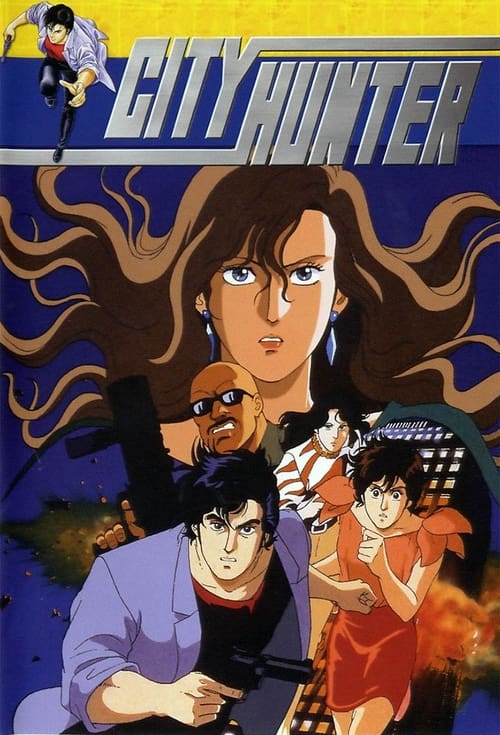
When it comes to iconic 80s anime that still feels vibrant, City Hunter is a name that springs to mind for many. It follows the adventures of Ryo Saeba, a debauched private detective who cleans up crime in Shinjuku with his Colt Python and a heart hiding deep pain. First airing in 1987, this series remains beloved worldwide, including in Thailand where it aired on Channel 9 and is hailed as a prototype for many action-comedy anime that followed.
Plot Summary (No Spoilers)
The story follows Ryo Saeba, a mysterious young man who becomes a 'City Hunter'—a sweeper who takes on dangerous jobs, from protecting VIPs to wiping out crime syndicates. He works alongside Kaori Makimura, his female partner who must curb Ryo's womanizing instincts with a giant 10-kg hammer. Their relationship gradually evolves from partners to something more, hindered by Ryo's past involving Kaori's deceased brother. The series presents a variety of cases, from dramatic life stories to comedic capers, showcasing Ryo's superhuman shooting and fighting skills, along with seamlessly integrated risqué humor.
Performance and Characters
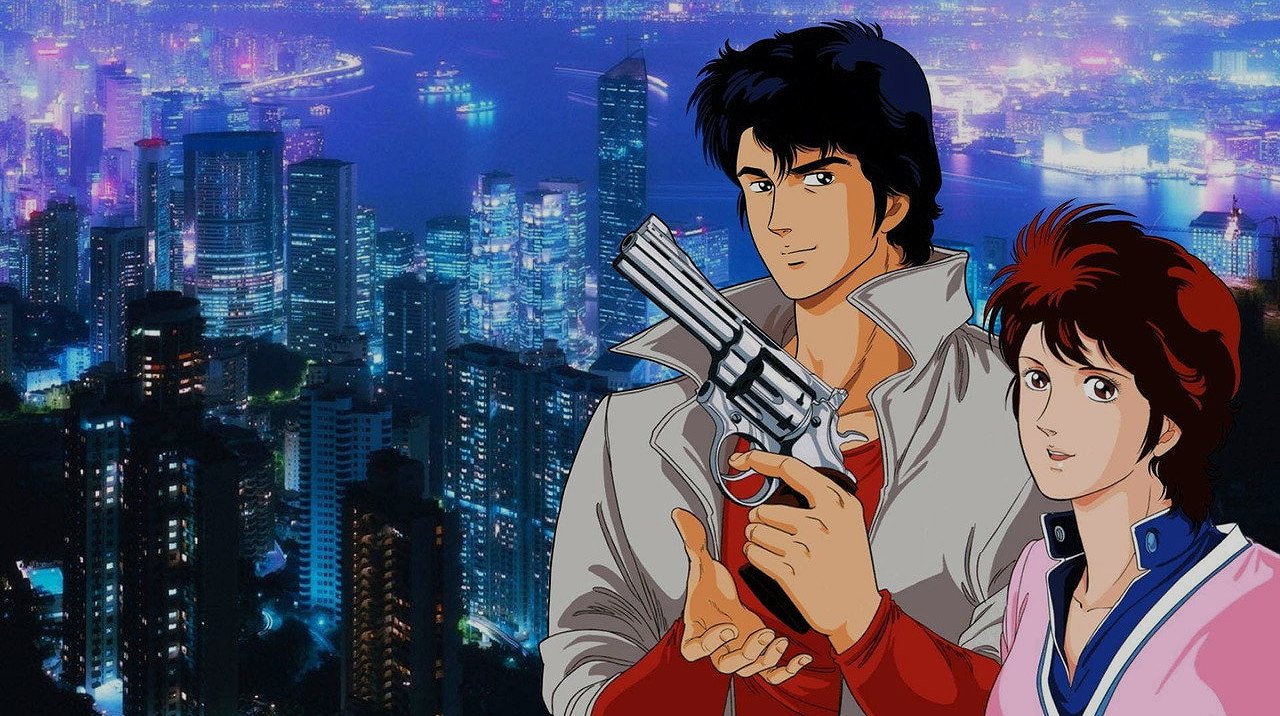
Though animated, the voice acting is the heart that brings characters to life. Akira Kamiya (Ryo Saeba) perfectly conveys a womanizing yet cool and gentle man, while Kazue Ikura (Kaori) delivers a partner who is both fierce and adorable. Other characters like Umibozu (a reformed ruthless mercenary) and Miki (the girl who loves Umibozu) are equally charming. Studio Sunrise's 80s character designs are unique—hairstyles, clothes, and poses are cool and distinctive. Though proportions may seem unrealistic, they fit the semi-realistic, semi-cartoonish tone perfectly.
Direction, Visuals, and Music
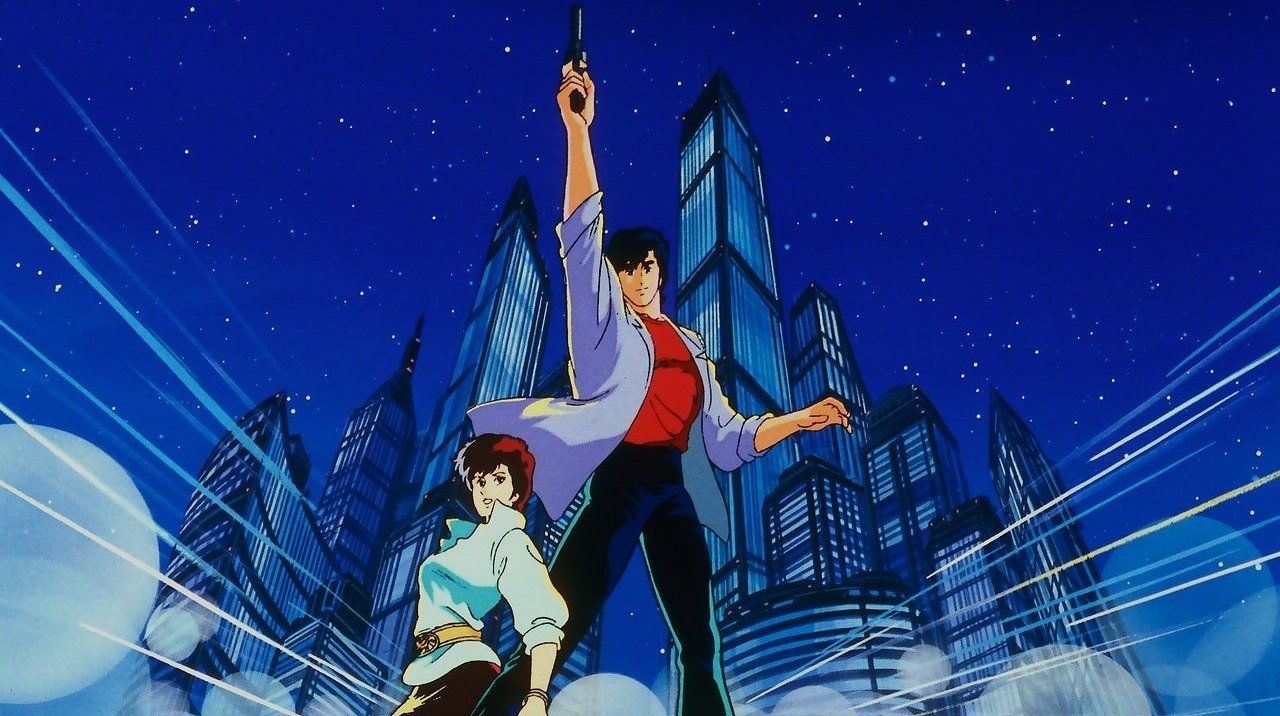
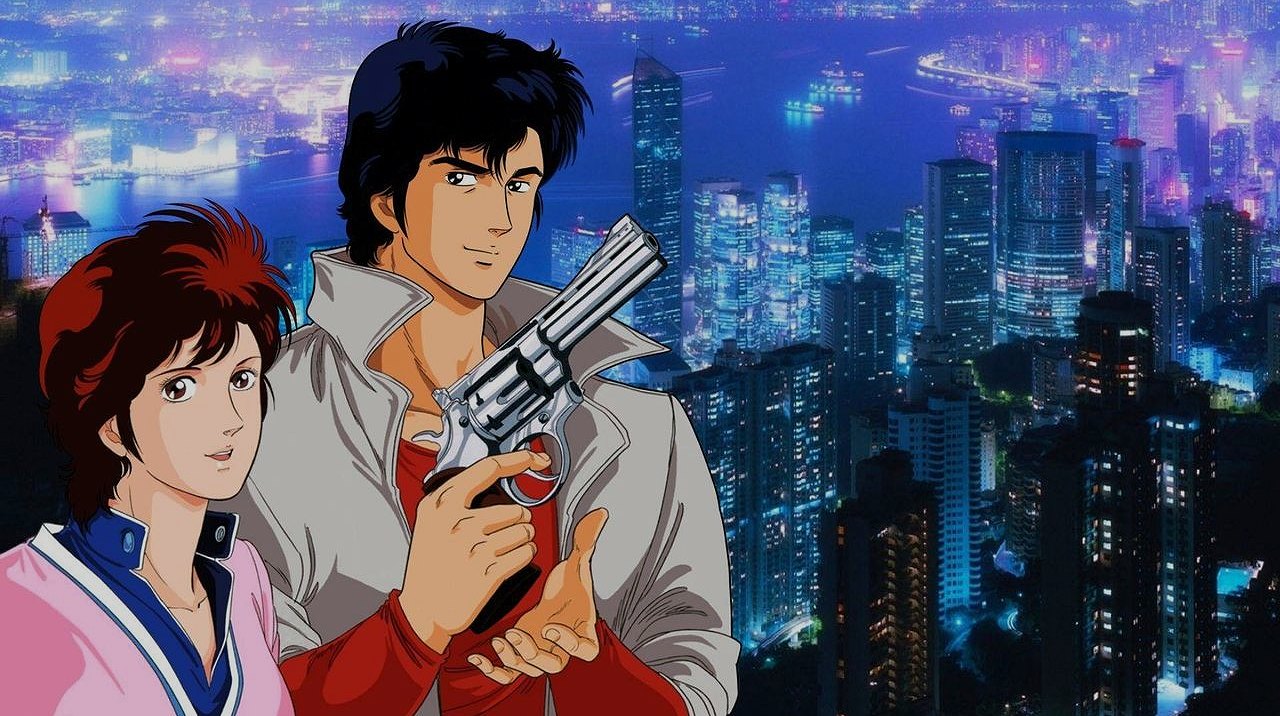
The series is directed by Kenji Kodama, known for works like Negima! and Ranma ½. He balances intense action scenes with slapstick comedy masterfully. Visually, despite being over 30 years old, the neon-lit Shinjuku backdrops and towering buildings still look beautiful and capture the nighttime metropolis atmosphere. The soundtrack by Takashi Yoshimatsu and Hiroaki Kageyama is memorable, especially the opening theme City Hunter ~Ai yo Kienai de~, which is exhilarating and classic.
Editorial Analysis
What makes City Hunter still watchable today is its blend of lighthearted fun and deep themes. Ryo Saeba isn't just a action hero; he's a man with past wounds, living in solitude and pretending to be cheerful to hide his pain. The relationship between Ryo and Kaori develops gradually, making viewers invested. Additionally, the series reflects Japan's bubble economy era—its extravagance, corruption, and social inequality—through the cases Ryo handles. However, Ryo's 'womanizing' may seem dated or inappropriate today, but that's part of the 80s charm that requires contextual understanding.
Verdict
For nostalgic anime fans wanting to relive childhood and newcomers seeking an 80s classic, City Hunter 1987 is a 'must-watch at least once.' With its blend of action, comedy, and emotion, despite some dated aspects, the classic charm and character appeal make this series timeless.
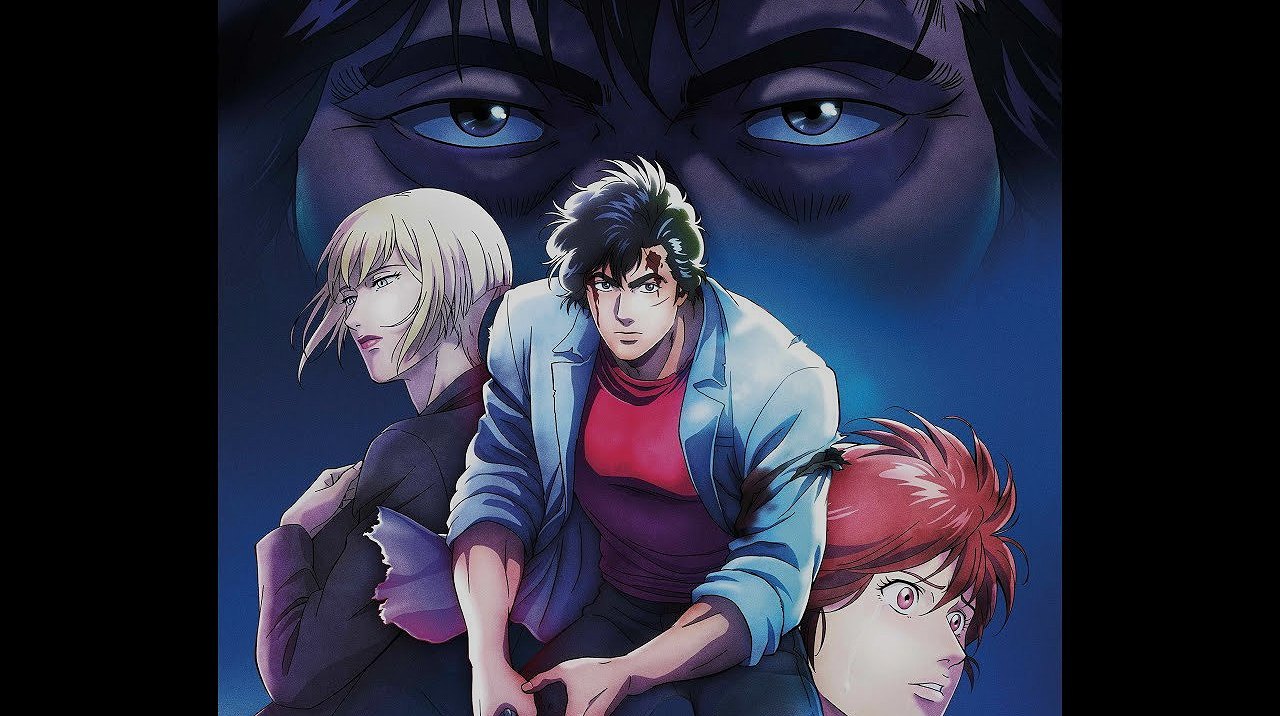
Screenshots
👍 Pros
- +Perfect blend of action, comedy, and drama
- +Charming main characters with engaging relationship development
- +Classic soundtrack that remains beautiful
- +High-quality original voice acting
👎 Cons
- −Womanizing jokes may be inappropriate for modern audiences
- −Some action scenes lack realism (e.g., giant hammer)
- −Certain episodes feel repetitive and drawn out
Top Cast





FAQ
Currently, it's available legally on streaming platforms like Netflix (in some countries) or through imported Blu-ray/DVD from Japan. In Thailand, it previously aired on Channel 9 and can now be found on unofficial streaming sites.
The original City Hunter anime has 4 seasons totaling 140 episodes (Season 1: 51, Season 2: 63, Season 3: 13, Season 4: 13). There are also several movies and a sequel series, City Hunter: Shinjuku Private Eyes (2019).
The original anime has more comedic and risqué humor, while live-action versions (e.g., Jackie Chan's 1993 film or the 2018 French adaptation) adopt a more serious tone and tone down the womanizing, but retain the core theme of a womanizing detective.